Is Walking 30 Minutes a Day Enough?
Walking 30 minutes a day is one of the simplest ways to build regular physical activity into your life. It requires little equipment, can be adapted to different fitness levels, and can fit into a busy schedule.
But is half an hour of walking actually enough?
For many adults, 30 minutes of brisk walking on most days can make a meaningful contribution toward recommended physical activity levels. However, whether it is “enough” depends on your walking intensity, how often you walk, your current fitness, and your individual goals.
The important thing is not to treat 30 minutes as a magic number. Instead, think of it as a practical foundation for a more active lifestyle.
Is Walking 30 Minutes a Day Enough for Health?
For many adults, it can be an excellent starting point.
The CDC recommends that adults get at least 150 minutes of moderate-intensity physical activity each week, along with muscle-strengthening activity on at least two days per week.
One simple way to reach 150 minutes is:
30 minutes × 5 days = 150 minutes per week
That means a 30-minute brisk walk on five days of the week can meet the basic weekly aerobic activity recommendation, provided the walking is performed at a moderate intensity.
Walking every day for 30 minutes would add up to 210 minutes per week, which falls within the WHO recommendation of 150–300 minutes of moderate-intensity aerobic activity per week for adults.
However, aerobic activity is only one part of a well-rounded fitness routine.
Your Walking Pace Matters
Not every walk has the same intensity.
A slow stroll through a store is different from a purposeful walk that raises your breathing and heart rate.
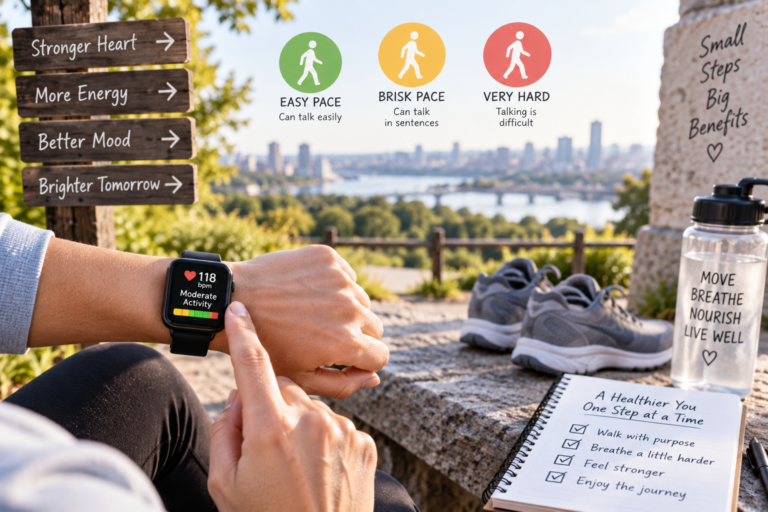
The CDC lists brisk walking as an example of moderate-intensity activity. One simple way to judge your effort is the talk test.
During moderate-intensity activity, you should generally be able to talk but not sing comfortably.
You do not need to turn every walk into a race.
Instead, aim for a pace that feels purposeful while remaining sustainable.
For someone who has been inactive, even a slower walk may initially feel challenging. Fitness level matters, so gradually increasing your pace and duration is often more realistic than trying to hit a particular speed immediately.
Do You Have to Walk for 30 Minutes at Once?
No.
You do not necessarily need one uninterrupted 30-minute walking session.
CDC guidance notes that weekly physical activity can be spread throughout the week and broken into smaller chunks of time.
For example, you might walk:
- 10 minutes in the morning
- 10 minutes during lunch
- 10 minutes after dinner
Or you might take one longer walk when your schedule allows.
This flexibility can make regular activity much easier to maintain.
If finding 30 continuous minutes feels difficult, do not let that prevent you from starting.
Movement accumulated throughout the day still counts.
What Happens If You Walk 30 Minutes Every Day?
A consistent walking habit can contribute to your overall physical activity and reduce the amount of time you spend inactive.
Regular physical activity supports both physical and mental health, and public-health organizations consistently encourage adults to move more and sit less.
A daily walk can also provide something less measurable but equally useful: a repeatable routine.
Exercise plans often fail because they are too complicated.
Walking is different.
You can walk around your neighborhood, through a park, during a lunch break, on a treadmill, or while running errands.
The easier an activity is to repeat, the more likely it is to become part of everyday life.
Is 30 Minutes Enough for Weight Loss?
This requires a more careful answer.
Walking uses energy and can be part of a weight-management plan, but body weight is influenced by more than one 30-minute activity session.
Food intake, total daily activity, body size, sleep, individual physiology, and other factors can all influence changes in body weight.
The CDC notes that physical activity increases energy expenditure, while weight loss generally requires an energy deficit. It also notes that some people may need more physical activity than the basic recommendation for weight management.
So it would be misleading to promise that walking exactly 30 minutes every day will automatically produce a specific amount of weight loss.
A better approach is to view walking as one part of a sustainable lifestyle that also includes nutritious eating, adequate sleep, and other forms of activity.
Walking Is Great — But Don’t Forget Strength Training
Walking provides valuable aerobic activity, but it does not completely replace strength training.
CDC guidelines recommend that adults perform muscle-strengthening activities involving major muscle groups on at least two days per week in addition to aerobic activity.
That might include:
- Dumbbell exercises
- Resistance bands
- Weight machines
- Bodyweight exercises
- Other appropriately challenging resistance exercises
You do not need to choose between walking and strength training.
They complement each other.
If you are building your weekly routine, read How Many Days a Week Should You Strength Train?.
A simple combination of regular walking and a few strength sessions can create a more balanced activity plan.
What If 30 Minutes Feels Too Difficult?
Then start with less.
One of the biggest mistakes people make when beginning an exercise routine is assuming that anything below the ideal target does not count.
It does.
WHO guidance emphasizes that some physical activity is better than none and recommends gradually increasing frequency, intensity, and duration for people who are not yet meeting activity recommendations.
If 30 minutes feels unrealistic right now, try:
- 5 minutes
- 10 minutes
- 15 minutes
Then gradually build from there.
A 10-minute walk you actually take is more valuable than a 30-minute walk you continually postpone.
What If 30 Minutes Feels Easy?
That is also useful information.
If you already walk 30 minutes comfortably and want to improve your fitness further, you have several options.
You could:
- Walk slightly faster
- Add hills
- Extend some walks
- Walk more frequently
- Try hiking
- Add cycling or swimming
- Include regular strength training
WHO recommends 150–300 minutes of moderate-intensity aerobic activity per week for substantial health benefits, with additional activity potentially providing further benefits.
You do not have to increase everything simultaneously.
Change one variable at a time and see how your body responds.
How Many Steps Is a 30-Minute Walk?
There is no single correct number.
The number of steps you take in 30 minutes depends on your pace, stride length, height, terrain, and other factors.
This is why using time and intensity can sometimes be more practical than chasing an exact step count.
Your phone or watch can still be useful for tracking patterns.
But do not assume that a particular daily step number is required before your walk “counts.”
The purpose is to move regularly, not to satisfy a device.
If you want a broader explanation of weekly walking recommendations, read How Much Walking Do You Need for Better Health?.
A Simple 30-Minute Walking Routine
You do not need a complicated program.
A straightforward walk could look like this:
First 5 minutes:
Walk at an easy pace and allow your body to settle into the movement.
Next 20 minutes:
Gradually move into a brisk, purposeful pace. Ideally, your breathing should increase while you can still hold a conversation.
Final 5 minutes:
Reduce your pace and finish comfortably.
This is only an example.
Someone new to exercise might spend more time walking slowly, while an experienced walker may choose a faster pace or more challenging terrain.
The routine should fit your current abilities.
Consistency Matters More Than a Perfect Routine
It is easy to spend too much time searching for the perfect exercise duration.
Twenty minutes or thirty?
Five days or seven?
Morning or evening?
Fast or slow?
Those details can matter, but they are less useful if the routine is too difficult to maintain.
A simple walking routine that fits naturally into your life has an important advantage: you can repeat it.
Think in months and years rather than individual workouts.
The goal is not to complete the perfect walk today.
The goal is to become someone who moves regularly.
The Daily Bearings Takeaway
So, is walking 30 minutes a day enough?
For many adults, 30 minutes of brisk walking on five days each week can meet the basic recommendation of 150 minutes of moderate-intensity aerobic activity per week.
Walking 30 minutes every day would provide even more weekly activity.
But walking should not be viewed as the only component of fitness.
Strength training, mobility, sleep, nutrition, and reducing prolonged inactivity all contribute to a healthy lifestyle.
If 30 minutes is difficult, start smaller.
If 30 minutes has become easy, gradually challenge yourself.
Most importantly, choose a routine you can continue.
Move. Breathe. Nourish.
References
Centers for Disease Control and Prevention (CDC) — Adult Activity: An Overview
CDC guidance on weekly aerobic and muscle-strengthening activity for adults.
CDC — Adult Activity Guidelines
Centers for Disease Control and Prevention (CDC) — How to Measure Physical Activity Intensity
Guidance on brisk walking, moderate intensity, and the talk test.
CDC — Measuring Physical Activity Intensity
World Health Organization — Guidelines on Physical Activity and Sedentary Behaviour
WHO recommendations for weekly physical activity and reducing sedentary behavior.
WHO — Physical Activity Guidelines
This article is for general educational purposes and is not a substitute for individualized medical advice. If you have a medical condition, injury, disability, or concerns about starting an exercise program, consider discussing appropriate activity with a qualified healthcare professional.