Why Mobility Matters as You Age — And How to Improve It
Why Mobility Matters as You Age — And How to Improve It
Mobility as you age plays an important role in staying active, independent, and confident in everyday life.
Being able to walk comfortably, reach overhead, bend down, get out of a chair, and move confidently through everyday life can be easy to take for granted.
But as the years pass, maintaining these abilities becomes increasingly important.
This is where mobility comes in.
Good mobility is not about being able to perform extreme stretches or complicated exercises. For most people, it is about having enough strength, flexibility, balance, and control to move comfortably through daily life.
And the good news is that mobility can be worked on at almost any age.
What Does Mobility Actually Mean?
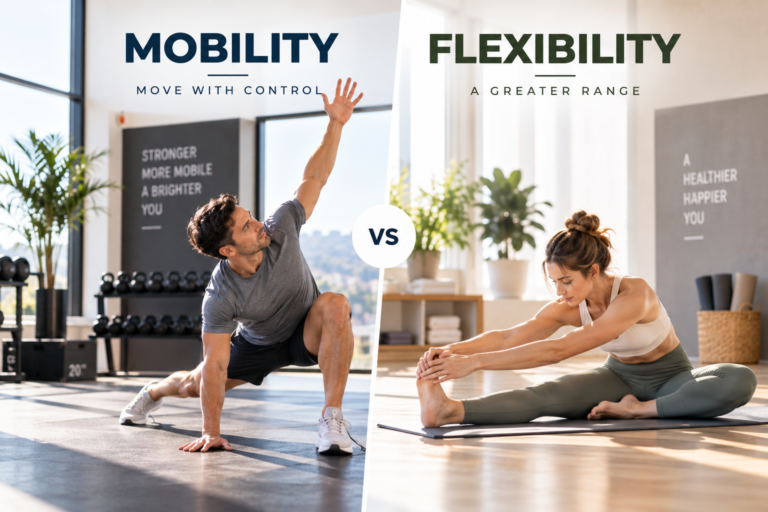
Mobility and flexibility are often used interchangeably, but they are not exactly the same thing.
Flexibility generally refers to the ability of a joint to move through its range of motion. The National Institute on Aging notes that stretching can help maintain and improve flexibility, making everyday activities such as reaching down to tie your shoes easier.
Mobility is broader.
It involves being able to control your body as you move through useful ranges of motion.
Think about everyday activities such as:
- Getting up from a chair
- Reaching for something on a shelf
- Walking up and down stairs
- Bending down to pick something up
- Turning to look behind you
- Getting in and out of a car
These movements involve more than flexibility alone. They require a combination of joint movement, muscle strength, balance, coordination, and control.
Why Mobility as You Age Matters
Staying physically capable can make everyday life easier and help support independence as we get older.
Regular physical activity is an important part of maintaining that capability.
For adults age 65 and older, the Centers for Disease Control and Prevention recommends a combination of aerobic activity, muscle-strengthening activity, and activities that improve balance each week.
That combination matters because healthy movement depends on several physical abilities working together.
You need enough strength to rise from a chair, enough balance to stay steady, and enough usable range of motion to perform the movement comfortably.
Mobility therefore should not be thought of as stretching alone.
Strength and Mobility Work Together
Strength is an important part of moving well.
Consider standing up from a chair.
Your hips, thighs, and core need enough strength to lift and stabilize your body while your joints need enough movement to allow you to complete the action comfortably.
This is one reason strength training and mobility training complement each other.
You do not necessarily need to choose between becoming stronger and moving better. A well-designed exercise routine can support both.
If you are building your strength routine, read our guide on how many days a week you should strength train.
Balance Is Part of Moving Well
Balance is another important piece of mobility, particularly later in life.
The CDC recommends that adults age 65 and older include activities that improve balance as part of their weekly physical activity.
Examples can include standing on one foot, walking heel-to-toe, and practicing standing up from a seated position. Activities such as tai chi and some forms of yoga can also combine several types of physical activity.
Balance does not need to be trained with complicated equipment.
Simple movements performed consistently can be useful.
When practicing balance exercises, however, safety matters. Use a sturdy chair, wall, or other stable support when necessary.
You Do Not Need a Long Mobility Routine
One of the biggest misconceptions about mobility is that it requires a long stretching session every day.
It does not.
A short routine that you can perform consistently is often more practical.
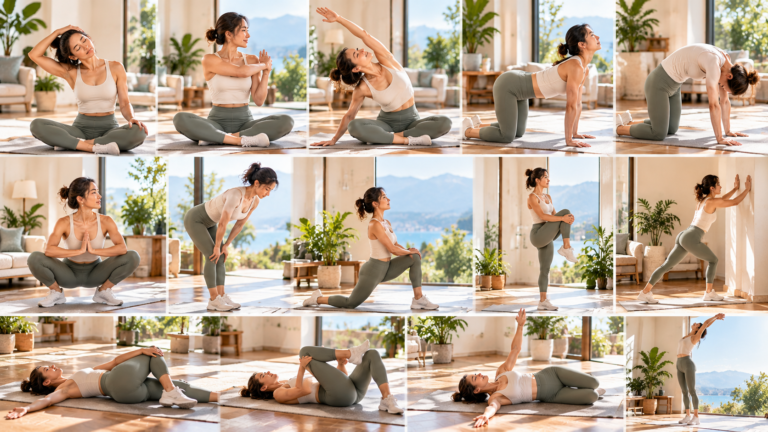
For example, you might spend several minutes working through movements for areas that commonly feel restricted during everyday life:
1. Shoulder movement
Slowly raise your arms overhead within a comfortable range.
2. Upper-back rotation
Gently rotate your upper body from side to side without forcing the movement.
3. Hip movement
Practice controlled hip movements or comfortable hip stretches.
4. Ankle movement
Move your ankles through a comfortable range or practice controlled heel raises.
5. Sit-to-stand
Practice standing from a sturdy chair with control.
The goal is not to force your body into the largest possible range.
The goal is to maintain useful movement that helps you function comfortably.
Stretching Should Not Hurt
Stretching may create a mild pulling sensation, but it should not be painful.
The National Institute on Aging recommends stretching when your muscles are warmed up and avoiding stretching so far that it hurts.
Avoid bouncing aggressively into a stretch.
Instead, move gradually and stay within a range you can control comfortably.
If a movement causes sharp pain, significant discomfort, dizziness, or unusual symptoms, stop.
People with injuries, joint replacements, significant balance problems, or medical conditions that affect movement may benefit from individualized guidance from a qualified healthcare professional or physical therapist.
Walking Can Support an Active Lifestyle Too
Mobility exercises are useful, but they should not replace regular physical activity.
Walking is one of the simplest ways many adults can stay active.
It can be combined with strength training, mobility work, and appropriate balance exercises to create a more complete weekly routine.
If you are working on becoming more active, you can also read How Much Walking Do You Need for Better Health?
The goal is not to build a complicated fitness schedule.
It is to keep moving regularly in ways that support the activities you want to continue doing.
A Simple Weekly Approach
You do not need to dedicate an entire workout to mobility.
Instead, mobility can fit around the rest of your activity.
For example:
Most days:
A few minutes of comfortable mobility movements
Several days per week:
Walking or another form of aerobic activity
At least two days per week:
Muscle-strengthening activities
As appropriate:
Balance exercises
For adults 65 and older, current U.S. guidance specifically recommends combining aerobic, muscle-strengthening, and balance activities.
The exact routine should always reflect your current fitness level, abilities, health, and goals.
Consistency Matters More Than Complexity
Mobility training does not need to look impressive.
The movements that matter most are often the ones that help you continue doing ordinary things comfortably.
Can you reach?
Can you bend?
Can you turn?
Can you get up from a chair?
Can you walk confidently?
Maintaining these abilities can be more meaningful for long-term quality of life than achieving an extreme stretch.
A few minutes of purposeful movement performed consistently can become part of a broader healthy lifestyle.
The Bottom Line
Mobility becomes increasingly valuable as we age because everyday independence depends on our ability to move comfortably and confidently.
But mobility is not just flexibility.
Strength, balance, coordination, joint movement, and regular physical activity all contribute to how well we move.
You do not need an elaborate mobility program.
Start with simple movements that feel comfortable, continue walking and staying active, maintain your strength, and gradually work on areas where movement feels limited.
The goal is not perfect flexibility.
The goal is to keep your body capable of doing the things that matter in everyday life.
References
1. National Institute on Aging (NIA) — Three Types of Exercise Can Improve Your Health and Physical Ability
National Institute on Aging — Exercise and Physical Activity
2. Centers for Disease Control and Prevention (CDC) — Older Adult Activity: An Overview
CDC — Physical Activity for Older Adults
3. U.S. Office of Disease Prevention and Health Promotion — Physical Activity Guidelines Midcourse Report: Questions and Answers
Health.gov — Physical Activity Guidelines for Older Adults
This article is for general educational purposes and is not a substitute for individualized medical advice. If you have an injury, medical condition, significant balance problems, or concerns about starting a new exercise routine, consider speaking with a qualified healthcare professional.