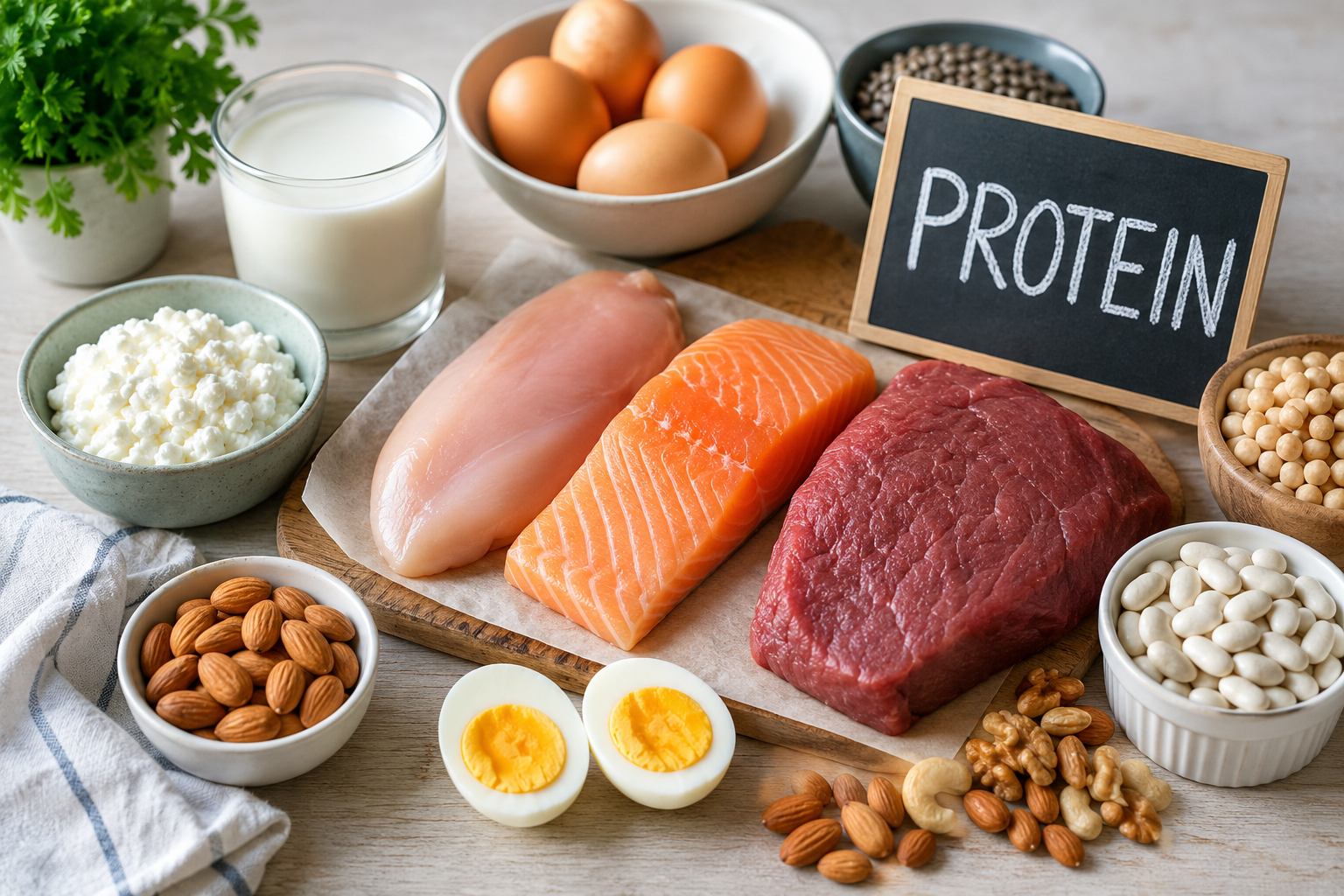
How Much Protein Do You Need Each Day?
How much protein do you need each day? Protein is essential for building and maintaining muscle and other tissues, but the amount you need is not necessarily the same as the amount someone else needs.
Your body weight, age, activity level, overall diet, and health can all influence your individual needs.
For most healthy adults, however, established dietary recommendations provide a useful starting point.
How Much Protein Do You Need?
The Recommended Dietary Allowance (RDA) for protein for healthy adults is 0.8 grams of protein per kilogram of body weight per day.
The RDA is designed to meet the needs of nearly all healthy people in a population group. It should be viewed as a useful baseline rather than a personalized target for every situation.
You can estimate this amount with a simple calculation:
Body weight in kilograms × 0.8 = grams of protein per day
For example:
- 60 kg × 0.8 = 48 g per day
- 70 kg × 0.8 = 56 g per day
- 80 kg × 0.8 = 64 g per day
- 90 kg × 0.8 = 72 g per day
If you know your weight in pounds, divide it by 2.2 to get an approximate weight in kilograms.
For example, a person who weighs 176 pounds weighs approximately 80 kilograms. Using the RDA calculation, that would equal about 64 grams of protein per day.
Is the Minimum Recommendation Enough for Everyone?
Not necessarily.
The RDA provides a useful reference point for healthy adults, but protein needs can vary.
Factors that may influence your protein needs include:
- Your body size
- Your age
- How physically active you are
- Whether you perform resistance training
- Your total calorie intake
- Pregnancy or breastfeeding
- Certain illnesses, injuries, or medical conditions
This is one reason it can be misleading to say that everyone should eat exactly the same number of grams of protein each day.
Someone who exercises regularly may have different nutritional needs from someone who is mostly sedentary.
Likewise, protein can become particularly relevant when maintaining muscle and physical function is a priority.
Why Protein Matters for Muscle
Protein provides amino acids that your body uses to build and maintain tissues, including muscle.
But eating protein alone does not automatically build muscle.
Physical activity — particularly resistance training — provides an important stimulus for maintaining and developing muscle.
That makes nutrition and strength training complementary rather than competing strategies.
If you are developing a resistance-training routine, read our guide on how many days a week you should strength train.
Maintaining muscle becomes increasingly relevant across adulthood, which is one reason both adequate nutrition and regular physical activity deserve attention.
Should You Eat More Protein as You Get Older?
This question is still an active area of research.
The established adult RDA remains 0.8 g/kg/day, including for older adults in the Dietary Reference Intake framework.
However, some research and expert groups have examined higher protein intakes in older populations, particularly when muscle loss, frailty, illness, or reduced food intake is a concern. For example, some interventions involving older adults have targeted approximately 1.0–1.2 g/kg/day.
That does not mean every older adult automatically needs 1.2 g/kg of protein.
Individual health status matters, and people with certain medical conditions may need individualized dietary advice.
The practical takeaway is simple: as you get older, paying attention to both protein intake and regular muscle-strengthening activity can be worthwhile.
Do You Need Protein at Every Meal?
You do not need to obsess over perfectly timing every gram of protein.
For many people, a more practical approach is to include a meaningful protein source at meals throughout the day rather than trying to consume most of their protein at one meal.
For example:
Breakfast
- Eggs
- Greek yogurt
- Milk or fortified soy alternatives
- Cottage cheese
- Tofu
Lunch
- Chicken or turkey
- Tuna or other seafood
- Beans or lentils
- Tofu or tempeh
- Yogurt or dairy products
Dinner
- Fish
- Lean meat or poultry
- Beans
- Lentils
- Tofu
- Other soy foods
Snacks
- Yogurt
- Milk
- Nuts or seeds
- Cottage cheese
- Roasted beans or chickpeas
The exact foods you choose can depend on your preferences, culture, budget, and overall dietary pattern.
Animal Protein vs. Plant Protein
You do not need to get all of your protein from meat.
Protein is found in a wide range of foods, including:
- Fish and seafood
- Poultry
- Eggs
- Dairy products
- Beans
- Peas
- Lentils
- Nuts
- Seeds
- Soy foods
Current U.S. dietary guidance recognizes multiple food groups as contributors to protein intake, and protein also comes from foods outside the traditional “protein foods” category.
A varied diet can therefore provide protein from both animal and plant sources.
Choosing a variety of foods also helps provide other nutrients alongside protein.
Do You Need Protein Powder?
For most people, protein powder is a convenience rather than a requirement.
It can be useful when getting enough protein from regular meals is difficult, but there is nothing inherently necessary about consuming protein shakes.
Whole foods can provide protein along with vitamins, minerals, fiber, healthy fats, and other nutrients depending on the food.
For example, someone who already eats adequate protein through meals may gain little practical benefit from adding protein powder simply because it is marketed as a fitness product.
If convenience is important, a protein supplement may fit into your diet. But it should complement a balanced eating pattern rather than replace one.
More Protein Is Not Always Better
It is easy to assume that if some protein is good, more must always be better.
Nutrition rarely works that way.
Protein is only one part of a healthy diet.
Fruits, vegetables, whole grains, healthy fats, and other nutrient-rich foods also matter.
Eating very large amounts of one nutrient can make it harder to maintain a varied diet, and individual medical conditions can affect what intake is appropriate.
People with kidney disease or other conditions that may affect protein recommendations should discuss their diet with a qualified healthcare professional rather than relying on a general online target.
Build Protein Into a Balanced Lifestyle
Protein works best as one part of a broader approach to health.
Regular walking can support an active lifestyle, while resistance training helps challenge and maintain your muscles.
If you are building a complete routine, you may also want to read How Much Walking Do You Need for Better Health?.
A sustainable approach might include:
- Regular physical activity
- Strength training
- Adequate protein
- Fruits and vegetables
- Whole or minimally processed foods
- Adequate sleep
- Time for recovery
No single food or nutrient replaces the rest.
A Practical Way to Think About Protein
Instead of asking, “How can I eat as much protein as possible?” consider asking:
Am I getting enough protein to support my body and lifestyle while still eating a balanced diet?
Start with established recommendations.
Look at your body weight and activity level.
Include protein-rich foods throughout your day.
And remember that your needs may change depending on your health, activity, and stage of life.
The Daily Bearings Takeaway
For healthy adults, 0.8 grams of protein per kilogram of body weight per day is the established RDA and provides a useful starting point.
But there is no single protein number that is ideal for every person.
Your activity level, age, health, body size, and goals all matter.
Rather than chasing the highest possible protein intake, focus on getting enough protein from a varied diet while staying physically active and maintaining your strength.
Small, sustainable habits matter more than extreme nutrition rules.
Move. Breathe. Nourish.
References
National Academies / NCBI — Dietary Reference Intakes: Protein
The adult RDA is based on approximately 0.8 g of protein per kilogram of body weight per day.
Dietary Reference Intakes — Protein
Dietary Guidelines for Americans — Protein Foods
Official U.S. dietary guidance covering protein-food choices and overall healthy dietary patterns.
Dietary Guidelines for Americans
PubMed — SPRINTT Nutrition Intervention
Research involving older adults that used a protein target of 1.0–1.2 g/kg/day in a specific intervention population.
SPRINTT protein study on PubMed
This article is for general educational purposes and is not a substitute for individualized medical or nutritional advice. If you have kidney disease, another medical condition, or specific dietary concerns, consider speaking with a qualified healthcare professional or registered dietitian.