How to Build a Healthy, Balanced Meal
Knowing how to build a healthy meal can make eating well much simpler.
Nutrition advice often feels more complicated than it needs to be. One day carbohydrates are the problem. The next day fat is something to avoid. Then a new diet promises that eliminating a particular food will finally solve everything.
For most people, however, a nutritious meal does not require a complicated set of rules.
A practical starting point is to build meals around a variety of minimally processed foods: vegetables and fruits, whole grains or other nutritious carbohydrate sources, protein-rich foods, and sources of healthy fats.
The exact foods can change with your culture, preferences, budget, appetite, and nutritional needs.
The underlying principles can remain surprisingly simple.
What Does a Healthy Meal Actually Look Like?
There is no single perfect meal.
A Mediterranean-style dinner, a rice-and-fish meal, a bean-based bowl, a sandwich with vegetables and fruit, or a soup made with vegetables, grains, and legumes can all fit into a healthy eating pattern.
Rather than judging a meal by whether it follows a fashionable diet, look at what the meal provides.
Does it contain vegetables or fruit?
Does it provide a useful source of protein?
Are the carbohydrates mostly coming from nutrient-rich foods?
Does it contain a reasonable source of fat?
Does the meal satisfy you?
Looking at the whole meal is often more useful than labeling individual foods as simply “good” or “bad.”
Harvard’s Healthy Eating Plate provides one visual model: approximately half the plate from vegetables and fruits, about one quarter from whole grains, and about one quarter from healthy protein sources, along with healthy plant oils and water.
That is a guide, not a mathematical requirement for every meal.
Start With Vegetables and Fruit
Vegetables and fruits provide vitamins, minerals, fiber, and a wide range of plant compounds.
Variety matters.
Instead of relying on the same vegetable every day, rotate colors and types when practical.
You might use:
- Leafy greens
- Broccoli or cauliflower
- Tomatoes
- Peppers
- Carrots
- Mushrooms
- Green beans
- Berries
- Apples
- Citrus fruit
- Melons
Fresh produce is not the only option.
Frozen vegetables and fruits can be convenient choices, particularly when fresh produce is expensive, out of season, or likely to spoil before you use it.
CDC also recommends whole fruits rather than relying heavily on fruit juice because whole fruit retains fiber and tends to be more filling.
You do not need a different “superfood” every day.
A varied pattern of ordinary fruits and vegetables is more important than chasing one supposedly perfect ingredient.
Make Plants a Bigger Part of the Plate
One of the easiest ways to improve a meal is not necessarily to remove something.
It is to add more nutritious foods.
If dinner is chicken and rice, add roasted vegetables or a salad.
If breakfast is eggs and toast, add berries, an orange, tomatoes, or another fruit or vegetable you enjoy.
If lunch is a sandwich, add vegetables inside it and fruit on the side.
This approach can feel less restrictive than starting with a long list of foods you are “not allowed” to eat.
Harvard’s Healthy Eating Plate suggests making vegetables and fruits roughly half of the overall meal, emphasizing variety.
Again, the plate does not have to look exactly like a diagram every time.
Think of it as a visual reminder to give plant foods a meaningful place in the meal.
Choose Carbohydrates for Quality, Not Fear
Carbohydrates have become unnecessarily confusing.
Carbohydrate-containing foods include everything from lentils and oats to apples, potatoes, bread, beans, and sugary drinks.
They are not nutritionally identical simply because they all contain carbohydrates.
Harvard’s Nutrition Source emphasizes that carbohydrate quality matters, with vegetables, fruits, beans, and minimally processed whole grains among higher-quality carbohydrate sources.
Practical options include:
- Oats
- Brown rice
- Barley
- Quinoa
- Whole-grain bread
- Whole-grain pasta
- Beans and lentils
- Potatoes and other starchy vegetables
This does not mean refined grains can never appear in a healthy diet.
It means that choosing more whole or minimally processed carbohydrate sources is a useful everyday default.
You do not have to become afraid of rice, bread, or fruit to eat well.
Include a Useful Source of Protein
Protein deserves a place in a balanced meal, but that does not mean every plate needs an enormous piece of meat.
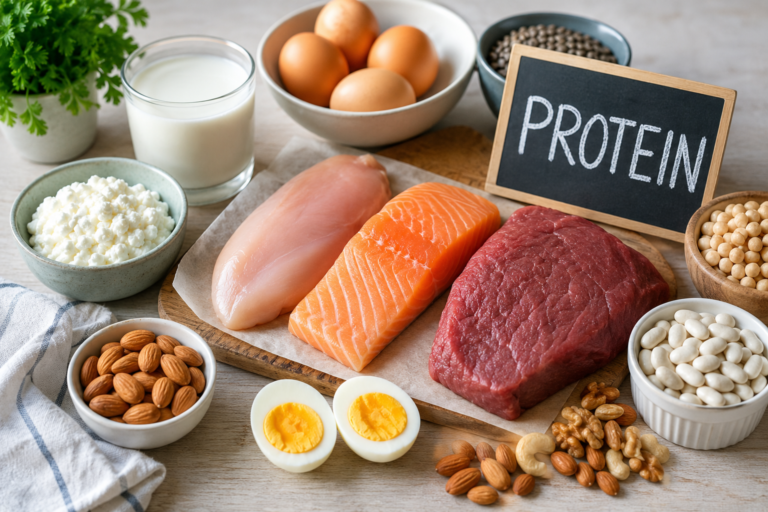
Protein can come from many foods, including:
- Fish
- Poultry
- Eggs
- Beans
- Lentils
- Tofu and other soy foods
- Yogurt
- Nuts and seeds
- Other protein-rich foods appropriate to your diet
Harvard’s Healthy Eating Plate recommends choosing sources such as fish, poultry, beans, and nuts while limiting red meat and processed meats.
Protein can be particularly relevant for people who are physically active or trying to maintain muscle as they get older.
But more is not automatically better, and individual protein requirements vary.
If you want to understand protein amounts rather than simply food choices, read How Much Protein Do You Need Each Day?.
Don’t Automatically Remove Fat
For years, “low fat” was often treated as synonymous with healthy.
Nutrition is more nuanced than that.
Foods containing unsaturated fats can be part of a nutritious diet.
Examples include:
- Olive oil
- Nuts
- Seeds
- Avocado
- Fish
Harvard’s Healthy Eating Plate emphasizes the type of fat rather than simply trying to eliminate fat from meals, recommending healthy plant oils while avoiding partially hydrogenated oils.
Fat also contributes flavor and can make meals more satisfying.
The practical lesson is not to pour unlimited oil over everything.
It is that a balanced meal does not need to be fat-free.
Fiber Is an Important Part of the Picture
Fiber is one reason whole plant foods deserve so much attention.
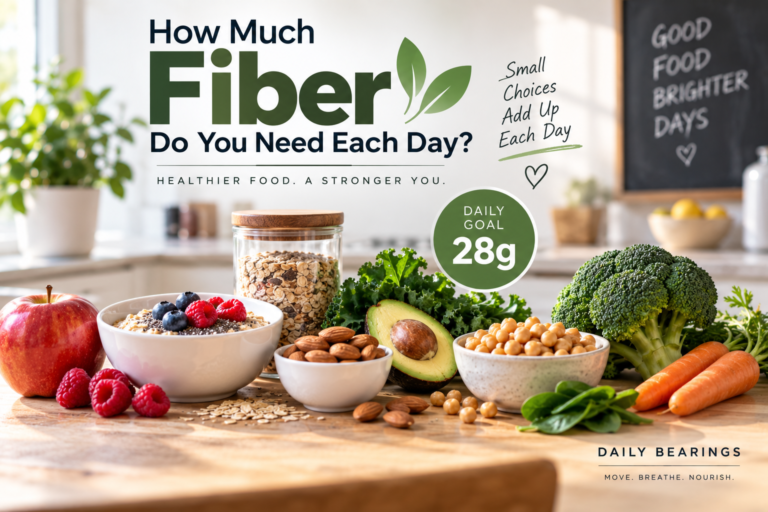
CDC notes that fiber supports digestive health, can help with fullness, and plays roles in blood sugar and cholesterol management. Fruits, vegetables, whole grains, legumes, nuts, and seeds are all useful sources.
Instead of immediately reaching for a fiber supplement, look at the meals you already eat.
Could you:
Add beans to a salad?
Choose oatmeal for breakfast?
Add berries and seeds to yogurt?
Swap some refined grains for whole grains?
Add vegetables to a soup, pasta dish, or stir-fry?
Small changes across several meals can add up.
And if your current diet is relatively low in fiber, increasing it gradually and drinking adequate fluids may be more comfortable than making a dramatic overnight change.
What Should You Drink With Your Meal?
Water is a simple default.
Sugary drinks can add substantial amounts of added sugar without providing the same nutritional value or fullness as whole foods.
CDC specifically recommends replacing sugary drinks with water as one strategy for reducing added sugar.
That does not mean every beverage other than water is automatically unhealthy.
Unsweetened tea and coffee can also fit into many people’s diets.
The bigger principle is to avoid allowing beverages to become a major, unnoticed source of added sugar.
You Don’t Need to Eliminate Every Processed Food
The word “processed” covers an enormous range of foods.
Frozen vegetables are processed.
Plain yogurt is processed.
Canned beans are processed.
Whole-grain bread is processed.
So simply saying “never eat processed food” is not especially useful.
Instead, look at the degree and purpose of processing, the overall nutritional profile, and how often the food appears in your diet.
CDC notes that a large proportion of sodium in the American diet comes from packaged and prepared foods and recommends using Nutrition Facts labels to identify lower-sodium choices.
Labels can help you compare similar products for sodium, added sugars, fiber, and other nutrients.
You do not need to inspect every food with anxiety.
Use labels as information, not as a reason to fear eating.
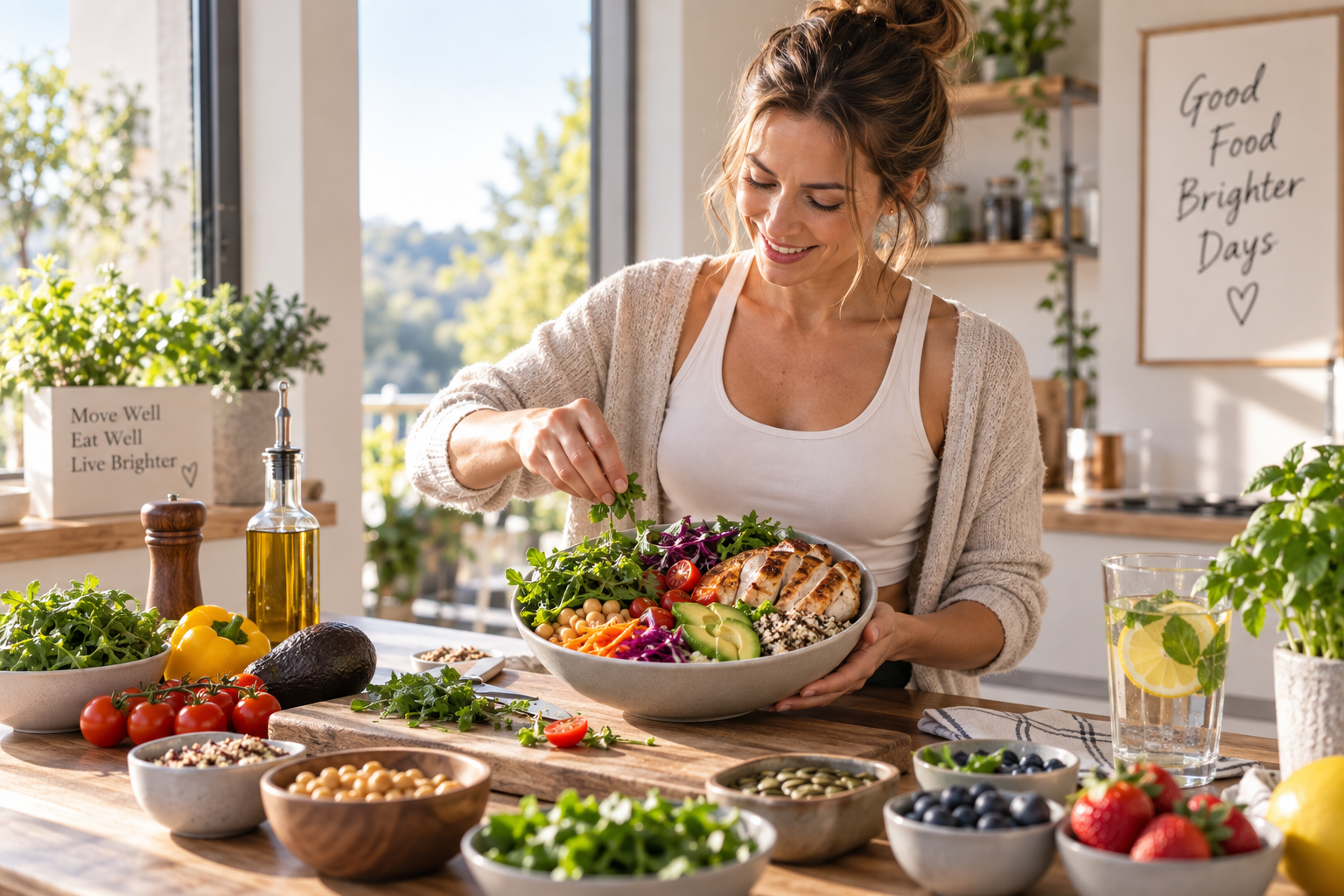
A Simple Formula for Building a Meal
When you do not know what to eat, use a simple framework.
1. Choose vegetables or fruit.
Start with one or more plant foods you actually enjoy.
2. Add a protein source.
Fish, chicken, eggs, beans, lentils, tofu, yogurt, or another suitable option can work.
3. Add a quality carbohydrate.
Try whole grains, beans, potatoes, or another minimally processed carbohydrate source.
4. Include some healthy fat where appropriate.
Olive oil, nuts, seeds, avocado, or naturally occurring fat in foods such as fish can contribute.
5. Choose water or another mostly unsweetened beverage.
That’s it.
You do not need to calculate the nutritional content of every forkful.
What Does This Look Like in Real Life?
Nutrition advice becomes much more useful when it survives contact with an ordinary Tuesday evening.
Here are a few examples.
Breakfast
Oatmeal with berries, plain yogurt, and nuts.
This provides whole grains, fruit, protein, and fats from nuts.
Lunch
A whole-grain wrap with chicken or beans, leafy greens, tomatoes, and avocado, with fruit on the side.
Dinner
Salmon, brown rice or another grain, and a generous serving of roasted vegetables with olive oil.
Plant-Based Meal
Lentils or beans with quinoa or brown rice, mixed vegetables, and a tahini-based dressing.
Quick Meal
Eggs with whole-grain toast, sliced tomatoes or another vegetable, and fruit.
None of these meals is magical.
That is precisely the point.
Healthy eating becomes easier when ordinary foods can do the job.
What About Portion Size?
Plate diagrams are useful, but appetite and energy needs differ substantially between people.
Someone who is large and highly active may need more food than someone who is smaller and less active.
Age, body size, activity level, goals, pregnancy, medical conditions, and other factors can all affect nutritional needs.
Harvard explicitly notes that its Healthy Eating Plate proportions are not specific calorie or serving prescriptions because individual requirements vary.
This is an important distinction.
A balanced plate helps you think about what foods make up the meal.
It does not automatically tell every person exactly how much to eat.
Healthy Eating Does Not Require Perfection
One meal does not determine the quality of your diet.
Neither does one dessert.
Neither does one restaurant dinner.
Nutrition makes more sense when viewed as a pattern over time.
If most of your meals contain nutritious foods and you regularly eat vegetables, fruits, quality carbohydrates, useful protein sources, and healthy fats, there is room for foods that are eaten primarily because you enjoy them.
An approach that demands perfection is difficult to sustain.
A better question than:
“Was this meal perfect?”
is:
“What does my usual eating pattern look like?”
That shift can make healthy eating much more realistic.
Don’t Let “Healthy” Become Needlessly Expensive
Healthy eating does not require premium powders, imported berries, specialty snacks, or foods marketed as “superfoods.”
Some extremely practical foods are also relatively inexpensive.
Depending on where you live, these may include:
- Oats
- Eggs
- Beans and lentils
- Frozen vegetables
- Seasonal fruit
- Canned fish
- Plain yogurt
- Brown rice
- Potatoes
- Peanut butter
- Nuts or seeds purchased economically
Frozen and canned foods can also reduce waste because they last longer.
For canned foods, checking labels for added sodium or sugars can help you compare options.
Nutrition quality comes from the overall food pattern, not from how expensive the packaging looks.
How Does a Healthy Meal Fit With Exercise?
Food and physical activity should not be treated as opposing sides of a calorie equation.
Movement supports health for reasons that extend well beyond “burning off” food.
Likewise, nutritious food supports an active body.
If you’re building a broader healthy routine, walking is one of the simplest places to begin.
Read Is Walking 30 Minutes a Day Enough? for a practical look at how walking fits current physical activity recommendations.
And if you are adding resistance exercise, How to Start Strength Training at Home explains how beginners can build a simple routine.
The goal is not to earn your meals through exercise.
It is to build eating and movement habits that can coexist for years.
When Individual Nutrition Advice Matters
General healthy-eating principles can be useful, but they cannot account for every medical or nutritional situation.
People with diabetes, kidney disease, gastrointestinal conditions, food allergies, eating disorders, nutrient deficiencies, or other conditions may require advice that differs from general guidance.
Pregnancy, certain medications, significant weight changes, and highly specific athletic goals can also change nutritional needs.
In those situations, individualized advice from a qualified healthcare professional or registered dietitian can be more appropriate than following a generic meal template from the internet.
The Daily Bearings Takeaway
Learning how to build a healthy meal does not require memorizing dozens of nutrition rules.
Start with a simple foundation.
Give vegetables and fruits a meaningful place in your meals.
Choose whole or minimally processed carbohydrate sources more often.
Include a useful source of protein.
Use healthy fats rather than assuming all fat should be removed.
Drink water regularly and pay attention to foods and beverages that contribute large amounts of added sugar or sodium.
Then make the framework fit your own culture, budget, preferences, appetite, and lifestyle.
The healthiest meal is not necessarily the one that looks perfect in a photograph.
It is one that provides good nutrition, fits into your life, and helps make healthy eating something you can actually continue.
Move. Breathe. Nourish.
This article is for general educational purposes and is not a substitute for individualized medical advice. If you have a medical condition, disability, or concerns about beginning a new exercise or nutrition routine, consider discussing appropriate changes with a qualified healthcare professional.
References
Centers for Disease Control and Prevention (CDC) — Healthy Eating Tips
Current practical guidance on fiber, added sugars, sodium, and healthier everyday food choices.
Harvard T.H. Chan School of Public Health — Healthy Eating Plate
An evidence-based visual framework for building balanced meals with vegetables, fruits, whole grains, protein, healthy oils, and water.
Harvard — Healthy Eating Plate
Centers for Disease Control and Prevention (CDC) — Increasing Fruits and Vegetables
Practical guidance on incorporating fruits and vegetables and choosing whole fruit.