How Much Walking Do You Need for Better Health?
How Much Walking Do You Need for Better Health? Walking is one of the simplest ways to stay active, but the right amount can vary depending on your current activity level, fitness, health, and daily routine.
The good news is that you do not need an extreme routine or a perfect daily step count. What matters most is building a level of activity you can maintain consistently.
How Much Walking Do You Need?
A useful place to start is with weekly physical activity rather than focusing only on steps.
The World Health Organization recommends that adults aim for 150 to 300 minutes of moderate-intensity aerobic physical activity per week. The Centers for Disease Control and Prevention also recommends at least 150 minutes of moderate-intensity activity each week, along with muscle-strengthening activities on at least two days.
Brisk walking can count toward that moderate-intensity activity.
For many people, 150 minutes per week can look as simple as:
- 30 minutes of brisk walking, 5 days a week
- 25 minutes of walking, 6 days a week
- Several shorter walks spread throughout the day
You do not have to complete all of your walking in one session. Shorter periods of activity can add up throughout the week.
Do You Really Need 10,000 Steps a Day?
Not necessarily.
The familiar 10,000-step goal can be motivating, but it should not be treated as a requirement that everyone must reach.
Your current activity level, fitness, schedule, age, and health all matter. Someone who currently walks 3,000 steps a day, for example, may find it more realistic to gradually increase their activity rather than immediately trying to reach 10,000.
Instead of chasing a perfect number, focus on progress.
If you are currently inactive, adding a short daily walk can already be a meaningful place to start. As walking becomes easier, you can gradually increase the duration, frequency, or pace.
How Fast Should You Walk?
Not every walk needs to be fast.
Easy walking is still movement and can be a useful way to spend less time sitting. But when you want your walk to count as moderate-intensity aerobic activity, a brisker pace is generally appropriate.
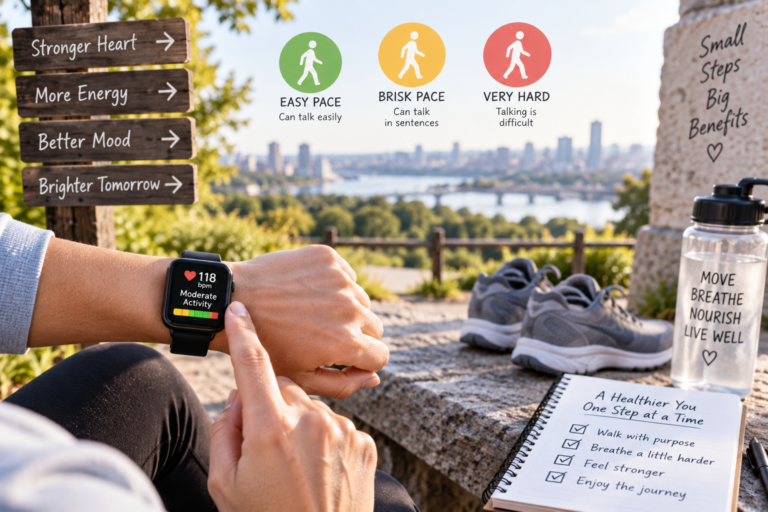
A practical way to judge moderate intensity is the “talk test.” According to the CDC, during moderate-intensity activity you should generally be able to talk, but not sing, while exercising.
You do not need to turn every walk into a workout. A sustainable routine can include both comfortable walks and more purposeful brisk walks.
Why Regular Walking Matters for Long-Term Health
Staying physically active is important for long-term health and everyday function.
Regular physical activity can support cardiovascular health, physical function, mobility, and overall well-being. Staying active also helps support your ability to perform everyday activities as you get older.
Walking is particularly useful because it requires little equipment and can fit naturally into ordinary life.
You can walk around your neighborhood, take a short walk after a meal, use the stairs when appropriate, walk while running errands, or meet a friend for a walk instead of spending the entire time sitting.
The best walking routine is often one that fits naturally into your life and that you can maintain.
A Simple Walking Plan to Get Started
How much walking do you need each week? The answer depends partly on your current activity level, health, and fitness, but starting gradually can make the routine easier to maintain.
If you have not been very active recently, there is no need to begin with long walks.
Try a gradual progression:
Week 1:
Walk for 10–15 minutes at a comfortable pace on 4 or 5 days.
Week 2:
Increase some walks to around 20 minutes.
Week 3:
Add short periods of brisk walking during some of your regular walks.
Week 4 and beyond:
Gradually work toward a weekly amount of activity that fits your health, fitness level, and schedule.
This is only an example, not a requirement. Adjust the pace of progression to your current ability.
The goal is not to progress as quickly as possible. The goal is to create a routine you can continue.
Walking Is Important — But It Is Not Everything
Walking is an excellent foundation, but a well-rounded approach to physical activity includes more than aerobic exercise alone.
Adults are also encouraged to include muscle-strengthening activities during the week. Strength, mobility, and balance can all contribute to maintaining physical function over time.
A balanced routine might eventually include:
- Walking or other aerobic activity
- Strength training for muscles and everyday function
- Mobility work to maintain comfortable movement
- Balance exercises when appropriate
- Adequate sleep and recovery
- Nutritious food to support an active lifestyle
You do not need to build all of these habits at once.
Start with one habit you can repeat consistently.
For many people, walking is a practical place to begin.
Walking also works well as part of a balanced routine that includes strength training. Learn how many days a week you should strength train for better overall health.
You can also explore why mobility as you age matters and how simple movement habits can help you stay active and capable.
The Daily Bearings Takeaway
There is no single walking or step-count target that everyone must achieve.
Instead of worrying about a perfect number, focus on moving more consistently and gradually working toward recommended levels of physical activity.
A 10-minute walk counts toward your activity.
A brisk 30-minute walk counts.
Taking the stairs can add more movement to your day.
And choosing to move more today than you did yesterday is a step in the right direction.
Long-term health is rarely built through one dramatic change. More often, it comes from small, sustainable choices repeated over time.
Move. Breathe. Nourish.
Sources
World Health Organization (WHO) — Guidelines on Physical Activity and Sedentary Behaviour
Centers for Disease Control and Prevention (CDC) — Physical Activity Guidelines for Adults
National Institute on Aging (NIA) — Exercise and Physical Activity
This article is for general educational purposes and is not a substitute for individualized medical advice. If you have a medical condition, injury, or concerns about starting or increasing physical activity, consider speaking with a qualified healthcare professional.