How Long Should a Nap Be? A Practical Guide to Better Napping
A nap can leave you feeling refreshed—or surprisingly groggy.
The difference often comes down to timing, duration, your current sleep needs, and when you take the nap.
So, how long should a nap be?
For many adults, a short nap of around 20 minutes can provide a useful period of rest while reducing the chance of waking from deeper sleep feeling sluggish. But there is no single perfect nap length for every person or every situation.
A nap can be helpful when you are temporarily tired, have had an unusually short night, or need additional alertness during the day.
But regular naps can also become complicated if they interfere with nighttime sleep or are being used to compensate for an ongoing sleep problem.
Understanding how naps work can help you use them more intentionally.
How Long Should a Nap Be for Most Adults?
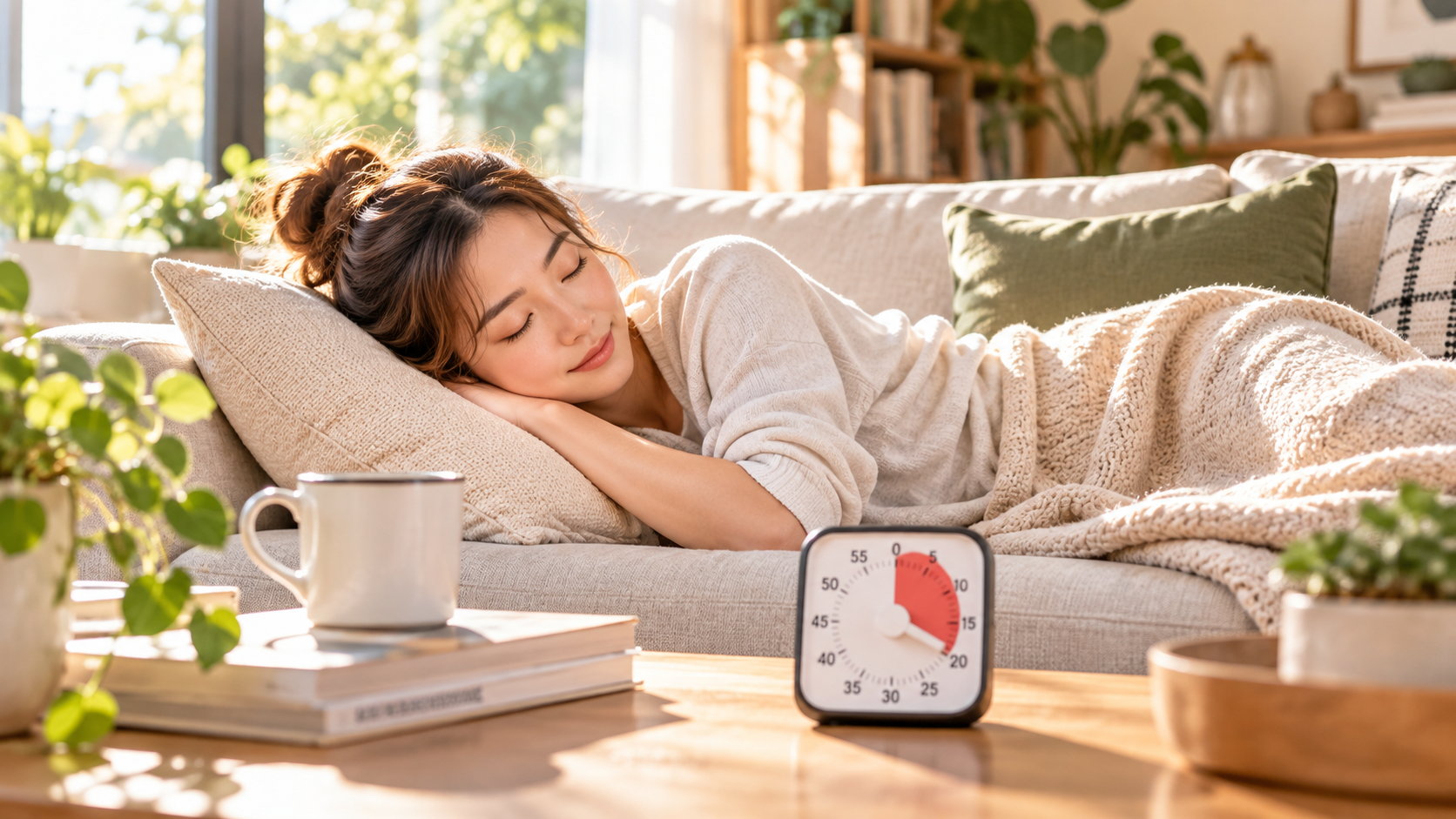
If your goal is a quick daytime refresh, a short nap of about 20 minutes is a practical starting point.
The Centers for Disease Control and Prevention’s National Institute for Occupational Safety and Health notes that a brief daytime nap of 15 to 30 minutes can help restore alertness. Longer naps may also be useful in some circumstances, but they are more likely to include deeper stages of sleep.
That matters because waking from deeper sleep can sometimes produce sleep inertia—the temporary grogginess and reduced alertness you may experience immediately after waking.
A short nap is therefore not necessarily better because “less sleep is healthier.”
It is useful because it may allow you to obtain some restorative rest without progressing as deeply into sleep before you need to wake up.
Why Can a Nap Make You Feel Groggy?
Have you ever planned to sleep for 20 minutes, woken up an hour later, and felt worse than before?
That feeling has a name.
Sleep inertia refers to the period of reduced alertness and performance that can occur after waking.
It can happen after nighttime sleep as well as after naps, but the effect can become more noticeable when you wake from deeper sleep.
The severity and duration of sleep inertia vary.
Your previous sleep, time of day, sleep stage at awakening, and individual characteristics can all influence how you feel.
This is why nap duration should not be treated as an exact formula.
Setting a 20-minute timer does not guarantee that every person will wake up feeling fantastic.
But keeping a daytime nap relatively short can be a reasonable way to reduce the chance of waking during deeper sleep.
What Is a Power Nap?
“Power nap” is not a special type of sleep.
It is simply a popular term for a short nap intended to improve alertness without taking a large amount of time out of the day.
For many people, that means roughly 10 to 30 minutes.
A power nap can be useful during a temporary afternoon slump or after an unusually demanding day.
The key word is temporary.
If you consistently need naps simply to function despite allowing yourself adequate nighttime sleep, it may be worth looking more closely at your nighttime sleep rather than continually adding daytime sleep.
Does a 20-Minute Nap Mean 20 Minutes in Bed?
Not necessarily.
This is an easy detail to overlook.
If you set an alarm for 20 minutes and it takes you 10 minutes to fall asleep, you may actually sleep for only about 10 minutes.
That is not necessarily a problem.
A short period of quiet rest may still feel useful.
But when people talk about nap duration, there can be a difference between time in bed and time actually asleep.
You do not need to obsessively track the difference.
Simply recognize that falling asleep is not instantaneous for everyone.
If you routinely need a long time to fall asleep during the day, your body may not actually need a nap at that moment.
Is a 30-Minute Nap Too Long?
Not automatically.
Some people tolerate a 30-minute nap very well.
Others wake feeling more sluggish.
As nap duration increases, there is a greater opportunity to move into deeper sleep, although sleep stages and timing vary between individuals.
That means the best nap length can partly depend on how you personally respond.
If you regularly wake feeling worse after 30-minute naps, try shortening them.
If you wake refreshed and your nighttime sleep remains good, there may be little reason to worry about the difference between 20 and 30 minutes.
The objective is not to hit a perfect number.
It is to find a nap pattern that improves your day without harming your night.
What About a 60-Minute Nap?
A longer nap can provide more total sleep, but it also increases the possibility of waking from deeper sleep and experiencing noticeable sleep inertia.
This does not mean a 60-minute nap is always harmful.
Context matters.
Someone who has experienced substantial sleep loss may have different needs from someone who slept well the previous night and simply feels mildly tired after lunch.
However, if your goal is to wake up quickly and return to work, driving, studying, or another activity requiring alertness, a shorter nap may be easier to manage.
Give yourself a little time after waking before doing something that requires your full attention if you feel groggy.
What About a 90-Minute Nap?
You may have heard that exactly 90 minutes equals one complete sleep cycle.
That idea is too simplistic.
Human sleep cycles are not identical clocks that always last exactly 90 minutes.
Sleep architecture changes throughout the night and varies between individuals.
A longer nap may allow more time for different stages of sleep, but there is no guarantee that setting an alarm for exactly 90 minutes will perfectly align with the end of a sleep cycle.
For some people, a longer nap can be appropriate after substantial sleep loss.
But it also uses considerably more of the day and may reduce the pressure to sleep later that night.
For routine daytime napping, longer is not automatically better.
When Is the Best Time to Take a Nap?
For many people, early afternoon is the most practical time.
Human alertness naturally fluctuates during the day, and many adults experience some degree of afternoon decline in alertness.
A nap during this period can also leave more time between the nap and bedtime.
By contrast, sleeping late in the afternoon or evening may make it harder to fall asleep at your usual bedtime—particularly if you already struggle with insomnia or maintaining a consistent sleep schedule.
Your schedule matters, though.
Someone working overnight shifts has a completely different sleep-wake pattern from someone working a traditional daytime schedule.
The best nap time therefore depends partly on when your main sleep period occurs.
Can Napping Ruin Your Nighttime Sleep?
It can, particularly if the nap is long or occurs too close to bedtime.
Sleep is influenced partly by sleep pressure.
Generally, the longer you remain awake, the stronger the biological pressure for sleep becomes.
Sleeping during the day can reduce some of that pressure.
For someone who sleeps well at night, a short early-afternoon nap may cause little trouble.
For someone already struggling to fall asleep at night, however, a long late-afternoon nap may make the problem worse.
If improving nighttime sleep is your priority, pay attention to whether your naps are affecting bedtime.
Our guide How to Sleep Better: Simple Habits for Better Rest covers other habits that can support a more consistent sleep routine.
A Nap Does Not Replace Adequate Nighttime Sleep
This is one of the most important points.
A nap can supplement sleep.
It should not routinely substitute for adequate nighttime sleep.
Adults generally need at least 7 hours of sleep per night, although individual needs vary.
If you routinely sleep five or six hours at night and depend on naps every afternoon to compensate, the more important question may not be:
“How long should my nap be?”
It may be:
“Am I allowing enough time for nighttime sleep?”
If you are unsure how much sleep adults generally need, see How Much Sleep Do You Really Need Each Night?.
A consistent nighttime sleep opportunity remains the foundation.
Why You Feel Sleepy in the Afternoon
An afternoon decline in alertness does not always mean something is wrong.
Your sleep-wake system is influenced by both accumulated sleep pressure and circadian rhythms.
That can contribute to a natural dip in alertness during part of the afternoon.
Other factors can amplify the feeling:
A poor night of sleep.
A very large meal.
Alcohol.
Dehydration.
Inactivity.
A warm or dim environment.
Certain medications.
An inconsistent sleep schedule.
Or an underlying sleep or health issue.
Before assuming you need a daily nap, consider whether another factor may be contributing to your fatigue.
Should You Drink Coffee Before a Nap?
You may have heard about a “coffee nap”—drinking caffeine immediately before taking a short nap.
Because caffeine does not exert its full effects instantly, some people use this strategy with the idea that the caffeine will begin taking effect around the time they wake.
Research has explored combinations of caffeine and short naps for alertness, particularly in situations involving fatigue.
But this strategy is not necessary for ordinary napping.
Caffeine can remain in the body for hours and may interfere with nighttime sleep, particularly in people who are sensitive to it or use it later in the day.
If nighttime sleep is already difficult, adding afternoon caffeine to your nap routine may work against your larger goal.
Should the Room Be Dark?
A comfortable nap environment can make falling asleep easier.
You may benefit from:
A quiet room.
Comfortable temperature.
Reduced light.
A supportive place to lie down or recline.
Silencing unnecessary phone notifications.
And setting an alarm if you need to wake at a specific time.
But you do not need to recreate a perfect nighttime bedroom for a 20-minute nap.
The objective is simply to reduce obvious disturbances enough to rest.
Should You Nap Every Day?
There is no requirement that healthy adults nap every day.
Some people enjoy regular naps and continue to sleep well at night.
Others rarely nap.
Both patterns can be normal.
The more important questions are:
Do you feel rested overall?
Are naps interfering with nighttime sleep?
Are you becoming increasingly dependent on them?
Has your daytime sleepiness changed significantly?
Do you unintentionally fall asleep during situations where you need to remain awake?
Those questions tell you more than whether you happen to nap.
Napping as You Get Older
Sleep patterns can change with age.
Older adults may notice changes in sleep timing, nighttime awakenings, or daytime sleepiness.
A short nap may feel useful, but the same general principle applies:
Daytime sleep should be considered alongside the quality and duration of nighttime sleep.
If naps become increasingly long or frequent because nighttime sleep is poor, simply extending the naps may not address the underlying issue.
Healthy aging involves more than accumulating hours of sleep.
Regular physical activity, appropriate light exposure, consistent routines, nutrition, and management of medical conditions can all interact with sleep and daytime energy.
Exercise Can Support Better Sleep
Physical activity and sleep are closely connected.
Regular exercise can support overall health and may contribute to better sleep.
That does not mean you need an exhausting workout every day.
Walking, strength training, and other forms of regular movement all contribute to an active lifestyle.
If prolonged sitting is a major part of your day, our guide How to Sit Less and Move More Throughout the Day provides practical ways to add more movement without turning every break into a workout.
Sometimes what feels like an afternoon need for sleep may partly reflect several hours of uninterrupted sitting.
A short walk may be worth trying before automatically taking a nap.
When Daytime Sleepiness Deserves More Attention
Occasional tiredness is normal.
Persistent or severe daytime sleepiness is different.
Consider discussing the issue with a qualified healthcare professional if you regularly experience excessive sleepiness despite allowing enough time for sleep, or if sleepiness significantly interferes with daily life.
Other reasons to seek professional guidance can include:
Loud or disruptive snoring.
Breathing interruptions during sleep reported by another person.
Frequently waking unrefreshed.
Difficulty staying awake while driving.
Sudden or uncontrollable episodes of sleep.
Persistent insomnia.
Or a significant unexplained change in your sleep pattern.
A nap can temporarily reduce sleepiness.
It cannot diagnose or treat the reason the sleepiness exists.
A Simple Nap Routine
If you want to experiment with napping, keep it simple.
Try taking your nap in the early afternoon.
Set aside approximately 20 to 30 minutes.
Use a quiet, comfortable environment.
Set an alarm if necessary.
When you wake, give yourself a few minutes to become fully alert.
Notice how you feel afterward.
Then pay attention to what happens that night.
Can you still fall asleep around your normal bedtime?
If yes, your nap may fit well into your routine.
If you repeatedly struggle to fall asleep after napping, experiment with a shorter or earlier nap—or skip it.
Your response provides useful information.
Don’t Turn Napping Into Another Health Rule
Sleep advice can easily become overly rigid.
Exactly 20 minutes.
Exactly eight hours.
Never nap after a certain minute.
Always wake at a particular sleep stage.
Real human sleep is more variable than that.
Guidelines provide useful starting points, but your sleep schedule also needs to work with your responsibilities, health, age, activity level, and individual sleep needs.
Use naps strategically rather than trying to perfect them.
The Daily Bearings Takeaway
So, how long should a nap be?
For many adults who want a quick daytime refresh, a short nap of around 20 minutes is a reasonable starting point. Brief naps may improve alertness while reducing the chance of waking from deeper sleep feeling especially groggy.
Early afternoon is often more compatible with nighttime sleep than a late-day nap.
But there is no perfect nap duration that works for everyone.
Pay attention to how easily you wake, how alert you feel afterward, and whether napping affects your ability to sleep at night.
Most importantly, remember what a nap cannot do.
It cannot routinely replace adequate nighttime sleep.
Use it as a tool when useful—not as a substitute for the foundation of healthy sleep.
Move. Breathe. Nourish.
This article is for general educational purposes and is not a substitute for individualized medical advice. If you have a medical condition, disability, or concerns about beginning a new exercise or nutrition routine, consider discussing appropriate changes with a qualified healthcare professional.
References
CDC/NIOSH — Napping, an Important Fatigue Countermeasure
CDC/NIOSH guidance on napping
CDC — About Sleep
CDC sleep guidance
National Heart, Lung, and Blood Institute — Sleep Deprivation and Deficiency
NHLBI sleep information