How to Stay Independent as You Age
For many people, healthy aging is not simply about living longer.
It is about continuing to live on your own terms.
Being able to walk through your neighborhood, climb stairs, carry groceries, get out of a chair, prepare meals, travel, enjoy hobbies, and spend time with the people you care about can matter just as much as the number of birthdays you celebrate.
That is why learning how to stay independent as you age is largely about protecting something called functional ability—your ability to perform the physical tasks that everyday life requires.
Aging can bring changes in muscle strength, balance, mobility, bone health, vision, and other areas. But losing independence is not an inevitable consequence of getting older.
The National Institute on Aging (NIA) notes that physical activity can improve physical function and make everyday tasks—such as household chores, getting in and out of a chair or bed, and moving around the neighborhood—easier.
The goal, therefore, is not to fight aging.
It is to preserve as much capacity, confidence, and freedom of movement as possible.
1. Protect Your Ability to Move
Mobility is one of the foundations of independent living.
If you can comfortably walk, turn, reach, bend, climb steps, and move through different environments, many other parts of life become easier.
Mobility problems can make seemingly simple activities more difficult—from shopping and visiting friends to getting around your own home.
NIA describes mobility as the ability to move or walk freely and easily and notes that maintaining mobility is important for functioning well and living independently.
But mobility should not be confused with flexibility alone.
Being able to stretch deeply does not automatically mean you can move well in daily life.
Useful mobility depends on several systems working together:
- Joint range of motion
- Muscle strength
- Balance
- Coordination
- Confidence
- Regular movement
This is why maintaining mobility should involve more than occasional stretching.
If this is an area you want to work on specifically, read How to Improve Mobility and Move More Freely.
2. Keep Walking—but Don’t Stop There
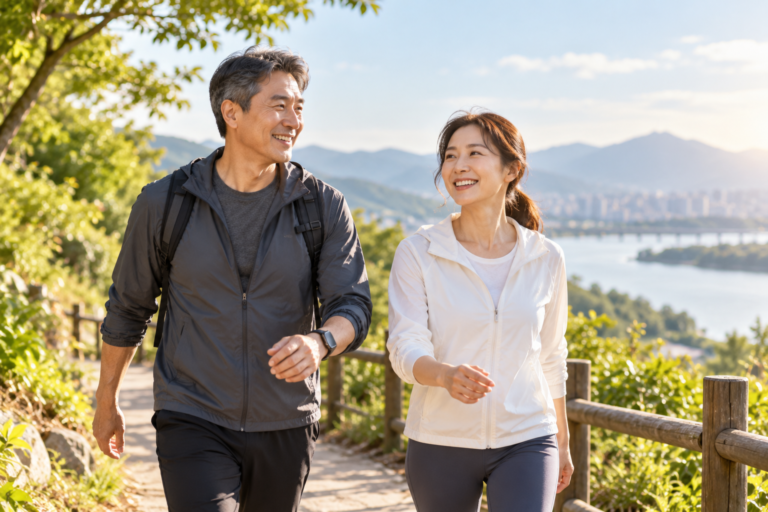
Walking is one of the most accessible ways to stay active.
It requires little equipment, can often be adjusted to your fitness level, and directly practices one of the most important skills for independence: moving yourself from one place to another.
Current CDC guidance recommends that adults 65 and older aim for at least 150 minutes of moderate-intensity aerobic activity per week, or an equivalent amount of vigorous or combined activity, when their health and abilities allow.
Brisk walking can contribute toward that target.
But walking should not be the entire plan.
CDC guidance for older adults includes three components:
Aerobic activity.
Muscle-strengthening activity.
Balance activity.
That combination matters because independence requires more than cardiovascular endurance.
You also need enough strength to stand up, carry things, climb stairs, recover from a stumble, and control your body.
If walking is currently your primary exercise, Is Walking 30 Minutes a Day Enough? explains how a daily walk fits into broader physical activity recommendations.
3. Strength Is an Independence Skill
Strength training is sometimes associated with bodybuilding, large muscles, or gyms.
For healthy aging, however, strength has a much more practical purpose.
Consider what happens during an ordinary day.
You stand up from a chair.
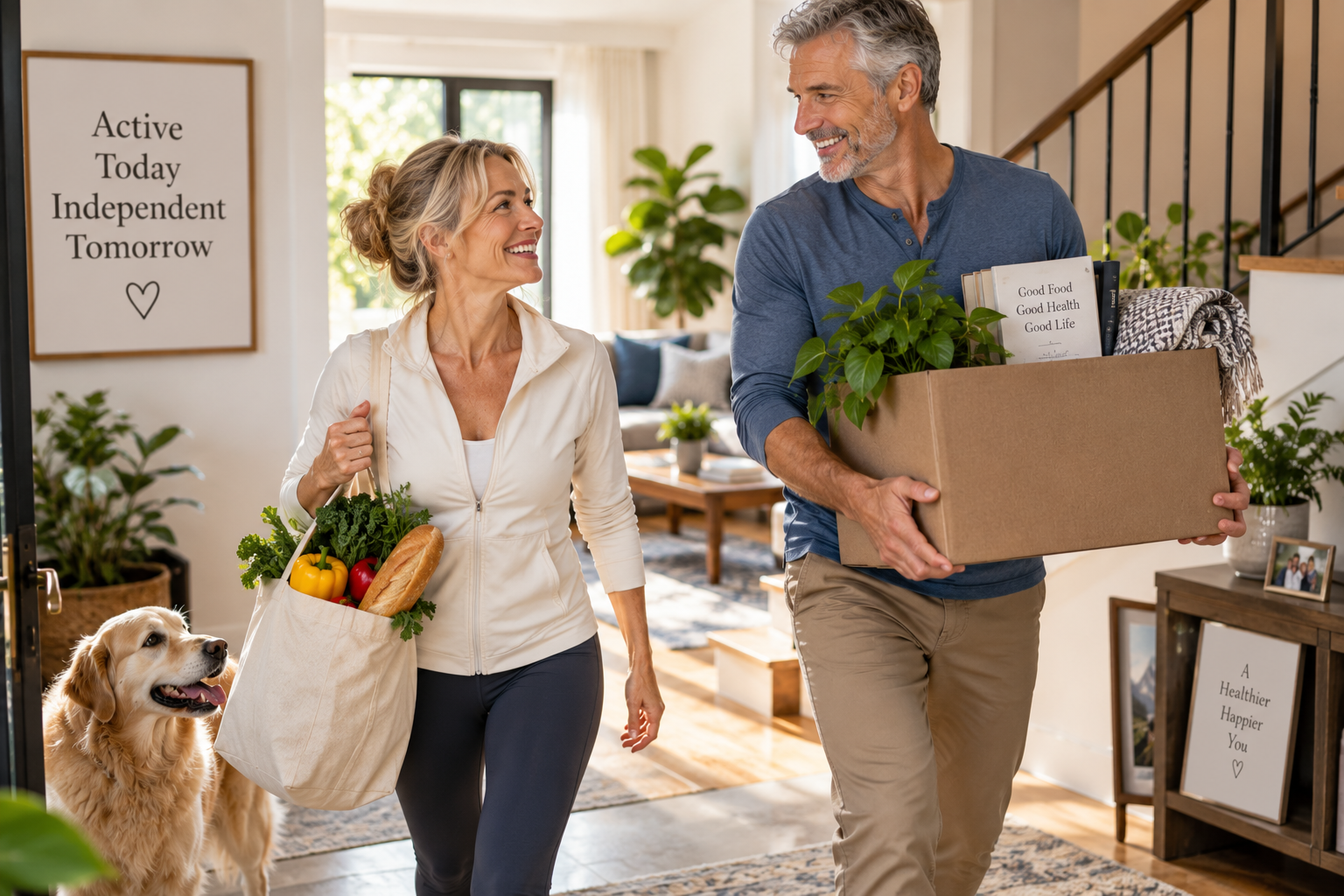
Carry groceries.
Lift a laundry basket.
Open a heavy door.
Climb stairs.
Get up from the floor.
Move luggage.
All of these tasks require force.
Age-related loss of muscle mass, strength, and function can make these activities progressively more difficult. NIA notes that movement and exercise may offer protection against age-related losses in muscle mass, strength, and function.
CDC recommends muscle-strengthening activities on at least two days each week for adults 65 and older, working the major muscle groups.
You do not necessarily need a gym.
Resistance bands, dumbbells, body-weight movements, machines, and other forms of resistance can all be useful depending on your ability and preferences.
The important question is not:
“How much muscle can I build?”
It is:
“Can my body comfortably handle the physical demands of my life?”
If you are new to resistance exercise, How to Start Strength Training at Home provides a simple starting point.
4. Train Balance Before You Think You Need It
Balance is easy to ignore when it is good.
Most people do not think about the hundreds of small corrections the body makes while walking, turning, stepping off a curb, putting on clothes, or moving across an uneven surface.
Until balance becomes difficult.
CDC specifically includes balance activities in its physical activity recommendations for adults 65 and older. Examples can include heel-to-toe walking and standing from a sitting position.
NIA also notes that balance exercises can help prevent falls and fall-related injuries.
Balance training does not need to be dramatic.
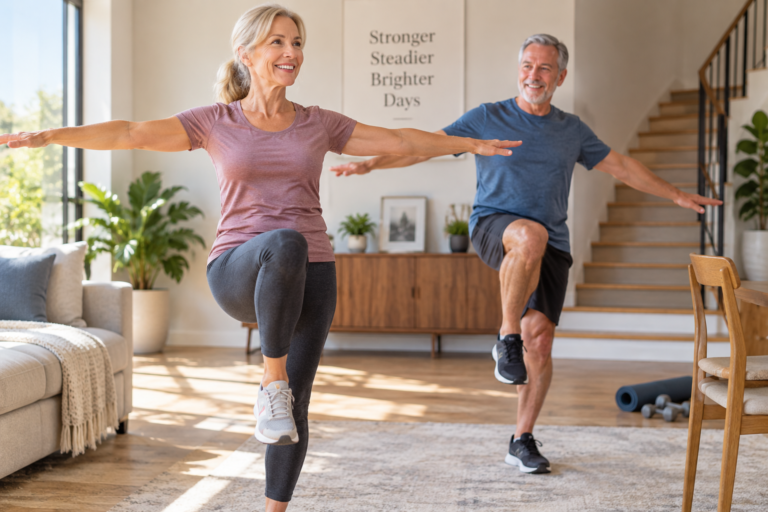
Depending on your current ability, it may involve controlled exercises such as:
Standing with a narrower base of support.
Heel-to-toe walking.
Practicing controlled sit-to-stand movements.
Standing on one foot while using a stable support when needed.
Tai chi or other activities that challenge controlled weight shifting.
Safety matters.
If you already have significant balance problems, dizziness, repeated falls, or difficulty standing safely, do not simply begin challenging balance exercises alone.
NIA advises people who experience balance problems to discuss them with a healthcare professional because medications, medical conditions, or balance disorders may contribute.
5. Practice the Movements Everyday Life Requires
Exercise becomes especially valuable when it supports what you actually want to do.
If getting out of a chair is becoming difficult, practicing appropriate leg-strengthening movements can be more meaningful than chasing an arbitrary fitness number.
If stairs are difficult, improving leg strength, aerobic capacity, and balance may matter.
If getting objects from the floor is uncomfortable, hip and ankle mobility combined with strength may help.
Think about the movements that appear repeatedly in ordinary life:
Sitting down and standing up.
Walking.
Climbing steps.
Carrying.
Reaching overhead.
Turning.
Bending.
Getting down to and up from the floor.
You do not need to turn every household task into a workout.
But your exercise program should ideally help maintain the abilities your lifestyle requires.
NIA reports that physical activity can make daily tasks easier and that greater functional ability can support independent living.
This gives exercise a more useful purpose than simply burning calories.
6. Avoid the Trap of Becoming Less Active Because You’re Getting Older
One of the most damaging assumptions about aging is that older adults should automatically become increasingly inactive to avoid injury.
NIA specifically challenges this misconception.
It notes that most people have more to gain from being physically active than from becoming sedentary, and that inactivity can contribute to losing the ability to perform activities independently.
This does not mean ignoring pain, medical conditions, or physical limitations.
It means adapting activity rather than abandoning it whenever possible.
A person who can no longer run may walk.
Someone uncomfortable with free weights may use resistance machines or bands.
A person with limited mobility may use seated or supported exercises.
Someone who cannot currently meet standard activity recommendations can still benefit from doing what their abilities and health allow. CDC explicitly makes this point in its guidance for older adults.
The objective is not to exercise like you did at 25.
The objective is to keep giving your body reasons to remain capable.
7. Take Fall Prevention Seriously
Falls are not simply embarrassing accidents.
They can have major consequences for independence.
NIA reports that more than one in four people age 65 and older fall each year and notes that falls can lead to fractures, hospitalization, disability, and other serious consequences.
Fall prevention is therefore part of healthy aging.
Strength and balance training are important, but fall risk can involve more than fitness.
NIA identifies multiple possible contributors, including:
Vision changes.
Certain medications.
Foot problems.
Balance and gait difficulties.
Muscle loss.
Blood-pressure changes.
Medical conditions.
Unsafe footwear.
Hazards around the home.
That means a complete fall-prevention strategy may include exercise and attention to your environment and health.
Loose rugs, poor lighting, slippery surfaces, cluttered walkways, and stairs without appropriate handrails may create unnecessary risk.
If falls, dizziness, or instability have already occurred, individualized evaluation becomes more important.
Independence Is Also About Confidence
Physical ability and confidence can influence each other.
Imagine someone who becomes afraid of falling.
They may stop walking outside.
Then they become less active.
Their legs may become weaker.
Their balance receives less practice.
Ordinary movement starts to feel more difficult.
Their confidence decreases further.
NIA notes that fear of falling can cause some older adults to avoid activities such as walking, shopping, or social activities, even though staying active itself is important for health and fall prevention.
The solution is not to tell someone to simply “be confident.”
Confidence should be built on capability.
Appropriate strength training, balance practice, safe environments, suitable footwear, and professional help when needed can create a stronger foundation for confidence.
Nutrition Supports the Body You’re Trying to Preserve
Exercise receives much of the attention in discussions about independence, but the body also needs adequate nutrition.
Protein is particularly relevant because muscle tissue depends on adequate nutrition as well as resistance exercise.
Protein needs vary with body size, activity, health status, and other factors, so there is no single ideal amount for everyone.
Our guide How Much Protein Do You Need Each Day? explains protein recommendations and practical food sources in more detail.
But protein is only one part of nutrition.
A balanced eating pattern should also provide vegetables and fruits, nutritious carbohydrate sources, healthy fats, and sufficient overall energy and nutrients.
For a practical framework, see How to Build a Healthy, Balanced Meal.
The goal is not to find a food that prevents aging.
No such food exists.
Nutrition helps provide the resources your body needs to maintain health and function.
Recovery Matters Too
More exercise is not automatically better.
Your body needs recovery.
Sleep is part of that process.
Poor sleep can affect energy, attention, mood, and the motivation to remain active. A sustainable healthy-aging routine should therefore include enough opportunity for sleep rather than treating rest as wasted time.
If sleep is an area you are working on, How to Sleep Better: Simple Habits for Better Rest covers practical habits involving sleep schedules, light, caffeine, screens, exercise, and the bedroom environment.
Healthy aging works best when movement, strength, nutrition, and recovery support each other.
Don’t Wait Until Something Becomes Impossible
One of the most useful principles of healthy aging is to notice changes in function.
Perhaps stairs suddenly feel much harder.
Maybe you increasingly use your hands to push yourself out of a chair.
You have started avoiding longer walks.
You feel unusually unsteady.
Carrying groceries has become noticeably more difficult.
You have experienced unexplained weakness.
Not every change signals a serious problem.
But significant or persistent changes should not automatically be dismissed as “just getting older.”
There may be opportunities to improve strength, adjust medications, address vision, manage pain, treat a medical issue, modify the home environment, or work with a physical therapist or another qualified professional.
Earlier attention can be more useful than waiting until an activity has become impossible.
A Practical Weekly Foundation
You do not need to organize your entire life around exercise.
A realistic week might include regular walking or another aerobic activity, two strength-training sessions, some balance practice, and small amounts of mobility work.
For adults 65 and older, current CDC guidance provides a useful overall framework:
At least 150 minutes of moderate-intensity aerobic activity per week, or an equivalent vigorous/mixed amount.
Muscle-strengthening activity at least two days per week.
Activities that improve balance.
These are population-level recommendations, not a requirement to ignore individual limitations.
If you cannot currently meet them, CDC recommends being as physically active as your abilities and conditions allow.
Start from where you are.
Then build gradually.
The Daily Bearings Takeaway
Learning how to stay independent as you age is not about trying to remain young forever.
It is about protecting the abilities that allow you to live your life.
Keep moving.
Maintain your strength.
Practice balance.
Protect your mobility.
Eat in a way that supports your body.
Give yourself enough recovery.
Pay attention when everyday tasks begin becoming noticeably harder.
And remember that independence is not measured by whether you can perform an impressive workout.
It is reflected in ordinary moments:
Getting out of a chair confidently.
Walking where you want to go.
Carrying what you need.
Moving safely through your home.
Participating in activities you enjoy.
Those everyday abilities are worth training for.
Move. Breathe. Nourish.
This article is for general educational purposes and is not a substitute for individualized medical advice. If you have a medical condition, disability, or concerns about beginning a new exercise or nutrition routine, consider discussing appropriate changes with a qualified healthcare professional.
References
National Institute on Aging — Health Benefits of Exercise and Physical Activity
Explains how physical activity can support physical function, everyday activities, fall prevention, and independent living.
NIA — Health Benefits of Exercise and Physical Activity
Centers for Disease Control and Prevention — Older Adult Activity: An Overview
Current recommendations for aerobic, muscle-strengthening, and balance activities for adults 65 and older.
CDC — Physical Activity for Older Adults
National Institute on Aging — Falls and Fractures in Older Adults
Information on fall risk, prevention, physical activity, strength, balance, and home safety.
NIA — Falls and Fractures in Older Adults